
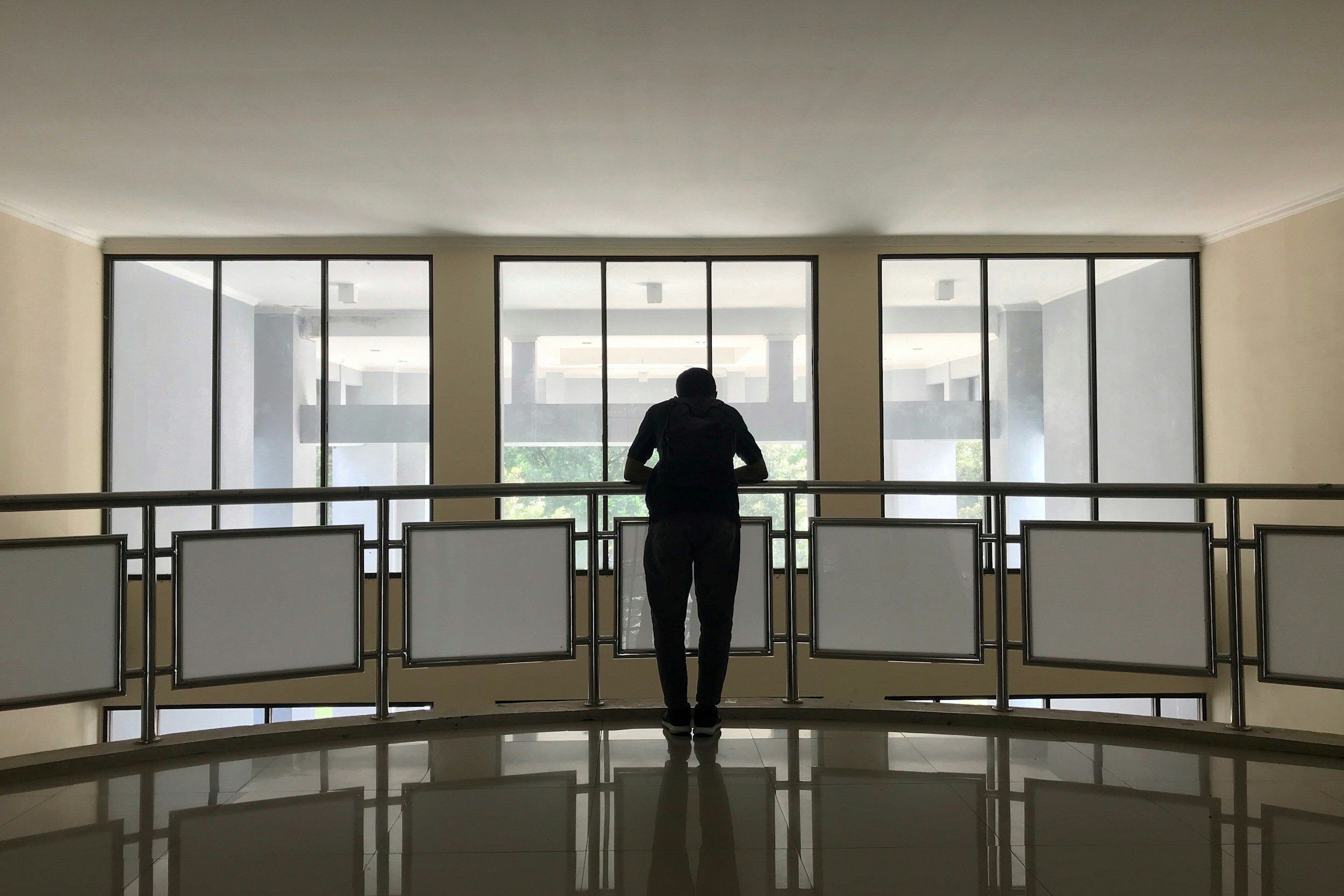
The announcement ends, but the stress often doesn't. In the weeks and months after a mass layoff, the people who left and the people who stayed can both feel on edge. Some wake at 3 a.m. and can't fall back asleep. Others notice their focus scattering across too many tabs, or find themselves checking Slack for signs that another round of cuts is coming.
These reactions make sense. Ongoing job insecurity keeps the body's stress response switched on, and research on stress physiology (McEwen, 2017) shows that sustained demand without enough recovery changes how the brain and nervous system work. Memory, mental clarity, and decision-making are usually the first to suffer. Healing happens on two levels: the care each person receives, and the repair of the organizational systems that keep people in threat mode.
Layoffs and the Nervous System
What leaders and layoff survivors carry
People who keep their jobs are often expected to feel lucky and get back to work. Many feel something more complicated. They grieve colleagues who are gone, they may feel guilty that they stayed, and they usually inherit heavier workloads. Brockner and colleagues' classic research on survivor reactions found that how people perceive the fairness of a layoff shapes their later commitment and effort. Later analysis shows that routine layoffs erode engagement and profitabilityover time.
Leaders carry a double load: the pressure of the decisions and the emotional weight of ending people's roles. When that strain lasts long enough, it can become burnout, which the World Health Organization describes as an occupational phenomenon caused by chronic workplace stress that hasn't been managed well. It shows up as exhaustion, mental distance or cynicism, and reduced professional effectiveness. In executives, it often looks like mental overload, shallow sleep, and trouble thinking clearly. The problem is already common. Canadian research from 2025 found that 39% of employees report burnout, at a cost to employers of $5,500 to $28,500 per employee per year.
For women in midlife, the pressure can stack. One in three working Canadian women are affected by menopause symptoms, and the transition accounts for an estimated 540,000 lost workdays each year. When disrupted sleep and brain fog from perimenopause meet layoff stress, they can make each other worse.
How trauma lives in systems
Harm isn't held only by individuals. A systems view of trauma shows that it becomes part of an organization's culture, policies, and ways of communicating. If a company handles layoffs through secrecy, abrupt messages, or silence afterward, those habits tend to repeat, and the nervous systems of everyone still there stay braced for the next hit.
That's why individual resilience can't repair a system on its own. A team can't meditate its way out of chronic ambiguity. Healing means changing the conditions that caused the harm and rebuilding trust, safety, and connection together.
Healing Individuals and Systems
Individual care in Toronto and across Ontario
Recovery starts with an accurate picture of what's going on. A primary care or medical assessment can rule out other causes of exhaustion and brain fog, such as thyroid changes, anemia, or perimenopause. From there, different kinds of support meet different needs:
| Support | What it addresses | Best suited for |
|---|---|---|
| Medical assessment | Ruling out physical causes of fatigue and brain fog | Anyone with persistent or worsening symptoms |
| Individual therapy | Emotional processing, grief, guilt, stress regulation | Survivors, departing staff, and leaders |
| CBT-I | Stress-related insomnia | People whose sleep has stayed disrupted for weeks |
| Executive coaching | Role clarity, decision-making, leadership habits | Leaders once health needs are being addressed |
Recovery starts with an accurate picture of what's going on. A primary care or medical assessment can rule out other causes of exhaustion and brain fog, such as thyroid changes, anemia, or perimenopause. From there, different kinds of support meet different needs:
Therapy deals with health and emotion. Coaching deals with performance and role. Keeping the two separate stops a leader from treating a nervous system problem as a productivity problem. Sleep is often where recovery begins, and clinical guidelines from sleep medicine treat behavioral approaches such as CBT-I as core insomnia care. Daily regulation practices, such as slow exhalation, brief movement breaks, and predictable wind-down routines, can support clearer thinking over time. They work alongside clinical care. They don't replace it.
Organizational recovery practices
Trauma-informed leadership after layoffs is mostly concrete and practical. It means transparent, predictable communication with a set cadence of updates. It means workloads that match the size of the team that's actually left, protected time to recover, and giving employees a real say in how work gets redesigned. These practices follow the principles of trauma-informed care: safety, trustworthiness, collaboration, empowerment, and cultural responsiveness.
Organizations can also choose the depth and setting of their support. Individual therapy offers private, one-to-one care. Structured programs give burnout recovery a set sequence. Corporate services work at the team and policy level. Retreats offer immersive, collective healing that complements ongoing care. The right mix depends on whether the main need is individual, collective, or both.
Recovery Is Both Physiological and Collective
The body needs signals of safety before it can settle, and some of those signals have to come from the workplace itself. Trauma also affects both mental and physical health, so recovery that only looks at productivity misses half the picture. Lasting change comes from combining individual regulation with repair of the conditions that keep stress going. For people looking for this kind of care, Delphia Wellness is a wellness centre offering nervous system-informed individual therapy, structured programs, corporate services, and retreats, delivered virtually across Canada. These are not crisis services.
Frequently Asked Questions
What helps executives recover from burnout in Toronto?
A combination usually works best: a medical assessment, evidence-based therapy, sleep support such as CBT-I, and real changes to workload. Coaching can add value once health needs are being addressed.
How can organizations heal after mass layoffs?
Treat recovery as a systems issue, not just an individual one. Communicate openly and on a predictable schedule, rebalance workloads, rebuild trust, and offer collective support alongside individual care.
Which stress reset services in Ontario support leaders?
Options include individual therapy, structured burnout programs, corporate wellbeing services, and retreats. Choose based on what you need and how much support it calls for. If you are in crisis, call or text 9-8-8.
References
Brockner, J., Grover, S., Reed, T., DeWitt, R., & O'Malley, M. (1987). Survivors' reactions to layoffs: We get by with a little help for our friends. Administrative Science Quarterly, 32(4), 526-541.
Edinger, J. D., et al. (2021). Behavioral and psychological treatments for chronic insomnia disorder in adults. Journal of Clinical Sleep Medicine, 17(2), 255-262.
McEwen, B. S. (2017). Neurobiological and systemic effects of chronic stress. Chronic Stress, 1.
Menopause Foundation of Canada. (2023). Menopause and Work in Canada, with economic analysis by Deloitte Canada.
Mental Health Research Canada. (2025). Workplace Mental Health Report.
Stanford Social Innovation Review. A Trauma Lens for Systems Change.
Substance Abuse and Mental Health Services Administration. (2014). SAMHSA's Concept of Trauma and Guidance for a Trauma-Informed Approach.
Substance Abuse and Mental Health Services Administration. Trauma and Violence: What Is Trauma and Its Effects?
Sucher, S. J., & Gupta, S. (2018). Layoffs that don't break your company. Harvard Business Review.
World Health Organization. (2019). Burn-out an "occupational phenomenon": International Classification of Diseases.